You don’t need the perfect start—just a smoother one.
One of the quietest ways to feel more settled in Stardew Valley is knowing which crops are actually worth planting in Year 1. You don’t need the absolute highest-gold layout or a spreadsheet. You just need a short list of reliable options for each season so your farm stays productive without becoming a second job.
This guide keeps things simple and practical. For each season you’ll find a small set of strong, beginner-friendly crops, why they work well in Year 1, and a few gentle notes on how to use them without stress.
A quick note before we start
These recommendations assume:
You’re still building your first-year foundation
You want solid income and useful items without perfect optimization
You’re okay skipping the most demanding or late-unlock crops until later
If a crop feels like too much work for where you are, skip it. A smaller, well-tended plot almost always feels better than a large stressed one.
Spring – Steady and forgiving
Spring is about getting money flowing and learning your rhythm.
Strong Year 1 choices:
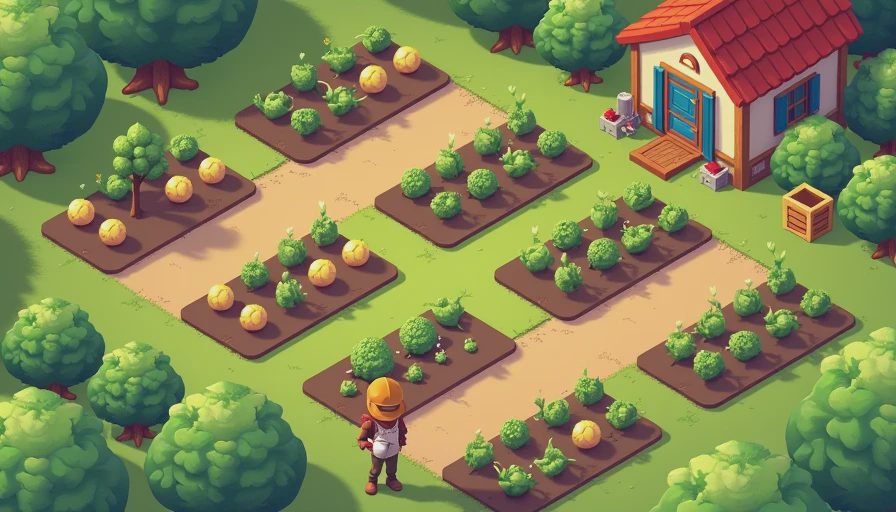
Potatoes – Reliable, decent return, and they give a chance at multiples. Easy to work into a simple grid.
Cauliflower – Higher value if you can protect it and water consistently. One of the better single-harvest options early on.
Kale – Fast and useful for both selling and cooking/gifting once you have a little extra.
Parsnips – Still worth a few for the very first days and for the Community Center if you need them.
Gentle Spring tips:
Start modest. Expand only as your watering can and energy allow. Mix a couple of faster crops with one higher-value option so you have both quick cash and something to look forward to.
Summer – Higher value, still manageable
Summer brings stronger earners and a few crops that feel especially satisfying.
Strong Year 1 choices:
Blueberries – Excellent multi-harvest crop. Once they’re growing, they keep giving with relatively little extra work.
Melons – High single-harvest value and useful for the Community Center. Protect them if you can.
Hot Peppers – Fast, repeatable, and handy for both gold and cooking.
Radishes or Summer Spangle – Solid fillers when you want something quicker or prettier.
Gentle Summer tips:
Blueberries are very forgiving for players who want steady income without replanting constantly. Leave a little space for one or two higher-value single-harvest crops if you enjoy the variety.
Fall – The big earning season
Fall is where many Year 1 farms feel the most rewarding.
Strong Year 1 choices:
Cranberries – One of the best multi-harvest options in the game for Year 1. Plant them and let them work for you.
Pumpkins – High value and needed for the Community Center. A few well-cared-for pumpkins go a long way.
Yams – Reliable and useful.
Eggplant or Fairy Roses – Good supporting crops depending on whether you want gold or gifts/forage-style value.
Gentle Fall tips:
Cranberries do a lot of the heavy lifting. Pair them with a small number of pumpkins or other single-harvest crops so the season feels abundant without becoming overwhelming to water.
Winter – Rest and prepare
You can’t grow normal crops outside in Winter, and that’s okay. Use the season to:
Focus on mining, fishing, foraging, and relationships
Plan next year’s layout
Process anything you’ve saved
Take a breather
If you have a greenhouse by the end of Year 1, you can keep a few high-value crops going—but it’s completely fine if that comes later.
A simple Year 1 approach that stays cozy
Plant what you can comfortably water and harvest.
Favor multi-harvest crops (blueberries, cranberries, hot peppers) once you unlock them—they reward consistency more than perfection.
Keep a few Community Center crops in the mix so progress feels natural.
Don’t stress about filling every tile. Empty space is allowed.
You don’t need the perfect start—just a smoother one.
If each season ends with a little more gold than the last, a few useful items in the chest, and a farm that still feels pleasant to walk through, you’re doing Year 1 exactly right. The “best” crops are the ones that fit the way you actually play.
When you’re ready for the next stretch—simple farm layouts, watering strategies, or how to carry this calm approach into Year 2—we’ll walk through it together, one steady step at a time.


