You don’t need the perfect start—just a smoother one.
The first week in Stardew Valley can feel like a lot. You’re handed a run-down farm, a short energy bar, and a calendar that already seems to be moving faster than you are. A lot of new players try to do everything at once—plant every seed, talk to every villager, clear every rock—and end up exhausted by Day 4 with almost nothing to show for it.
This guide is different. It walks you through the first seven days with a clear order of priorities so you can build a solid foundation without burning out. We’ll focus on what actually moves the needle early, what can safely wait, and how to keep the game feeling calm and fun while you progress.
What “a strong Year 1” actually means here
We’re not aiming for a perfect farm or maximum profit on Day 28. We’re aiming for:
Enough crops and foraging to keep money coming in
A few key upgrades that make the rest of the season easier
A daily rhythm that doesn’t leave you drained
A sense of progress without the pressure of “I should be further ahead”
That’s it. Everything else can wait.
Day 1: Settle in and set the stage
Wake up, grab the 15 parsnip seeds from Lewis, and walk south to your farm.
Priority order for Day 1:
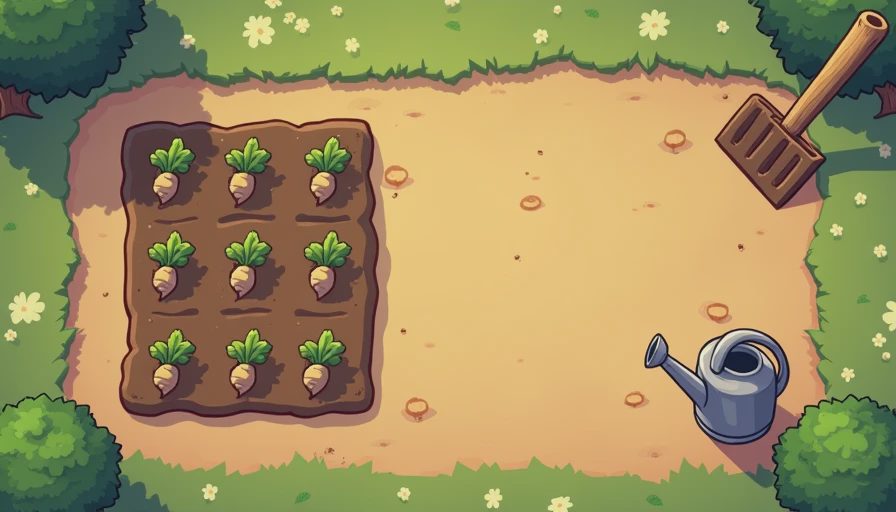
Clear a small 3×4 or 4×4 plot near your house (enough for the 15 parsnips). Don’t try to clear the whole farm.
Plant the parsnips. Water them.
Chop a few trees for wood and gather any nearby forage (spring onions, leeks, dandelions).
Talk to a couple of villagers if you pass them on the way to town, but don’t force a full social tour.
Go to bed when your energy is low. Sleeping early is not a waste—it’s the smartest way to recover.
What you can ignore today:
Mining, fishing, friendships, and big farm-clearing projects. Those come later.
Day 2–3: Establish a simple daily rhythm
By Day 2 you should have a tiny working plot and a better sense of how energy works.
Daily loop for the rest of the first week:
Water your crops first thing.
Clear a little more land only if you still have energy.
Forage on the way to town or the beach.
Check the Community Center notice board and the general store for any useful seeds or tools.
End the day with a short fishing session at the river or mountain lake if you have leftover energy (even a few catches help).
Key early purchases (when you can afford them):
A few more spring crop seeds (cauliflower or potatoes are strong choices once you have cash)
The backpack upgrade from Pierre’s as soon as you can—inventory space is one of the biggest quality-of-life improvements in the early game
Day 4–5: Expand carefully and start looking outward
Your first parsnips should be ready around Day 4. Sell them, reinvest in more seeds, and keep the plot modest. A slightly larger watered area is better than a huge dry one.
This is a good time to:
Visit the mines for the first time (bring food). Even a short trip for copper and some combat practice is useful.
Talk to a few more villagers. You don’t need max friendship; just start the relationships that feel natural.
Notice the seasonal forage and wild seeds. Foraging is quiet, reliable income and helps with early Community Center bundles.
Day 6–7: Take stock and set yourself up for the rest of Spring
By the end of the first week you should have:
A reliable small crop plot that’s easy to water every day
A bit of money coming in from crops + forage + maybe a little fishing or mining
The backpack upgrade (or be close to it)
A clearer idea of which parts of the farm feel manageable
Gentle next-step summary for the end of Week 1:
Keep watering and expanding the crop area slowly.
Start saving toward a better watering can or the first farm building if that feels exciting.
Begin checking the Community Center bundles that look realistic for Spring.
Protect your energy. A slightly smaller farm that you can actually maintain feels better than an ambitious one you abandon by mid-Spring.
A few common early-game traps (and how to step around them)
Clearing too much land too soon. Every rock and tree costs energy. Clear only what you need for the next few days of planting.
Trying to befriend everyone at once. Pick two or three villagers whose gifts are easy to find and focus there.
Ignoring forage. Spring onions and other wild items are free money and free energy recovery in the first week.
Staying up until 2 a.m. every night. Passing out is expensive. Going to bed with energy left is often the better call.
You don’t need the perfect start—just a smoother one.
If your first week ends with a watered plot, a little cash, and the feeling that you know what tomorrow looks like, you’re already ahead of most new players. The rest of Year 1 will feel much calmer from here.
Come back when you’re ready for the next stretch—we’ll walk through the rest of Spring together, one steady step at a time.


